This week for class I had the charge to create a lesson plan focused on media literacy using artificial intelligence (AI) in some way.
As a former technology journalist and friend of artists, I’m concerned about AI and the many impacts it will have. Just read this Wired article on how generative AI depicts queer people for one of many, many ways AI can be harmful. But working on this lesson plan was a good exercise, since students need to know about AI and understand it. We can’t stick our heads in the sand and pretend it’s not happening. We have to give students the tools to evaluate sources for themselves and make them think through the consequences of using AI.
I chose to target my lesson toward fifth graders, one of the grades I will be teaching this year. I also chose to focus on AISLE Standard 2 for Media Literacy for Grades 3-5, “evaluate,” where students need to “establish and apply criteria to determine diverse, balanced resources.”
The first bullet under this standard says that students can “recognize that there are facts, point of view, and opinion in media.” My plan was to make a lesson plan where students evaluate several different sources talking about AI for facts, opinions and potential bias. I headed to MagicSchool.ai and used their lesson plan generator. It asked me about the grade, objectives and standards I’d like to meet and then gave me a plan.
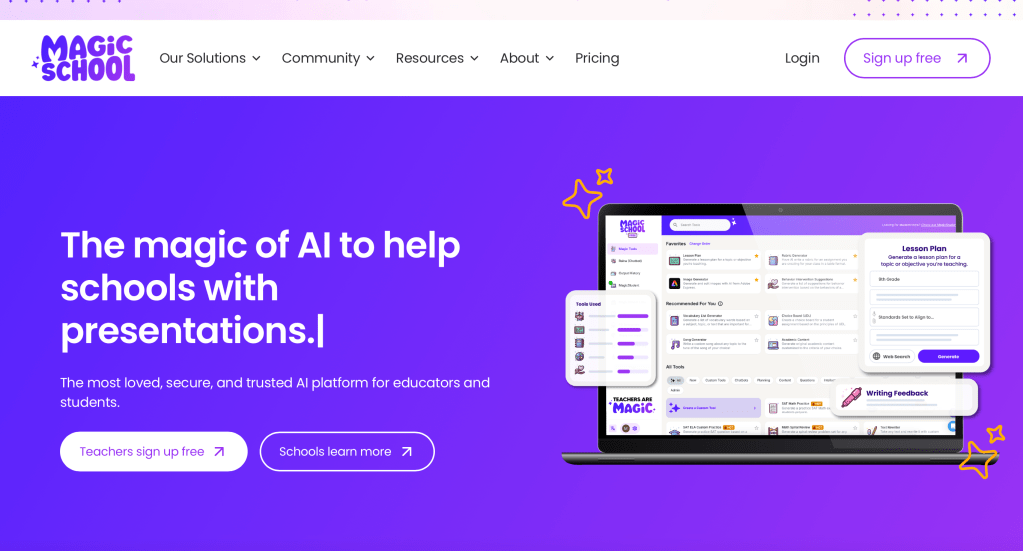
So what did I think about the lesson plan? The first version it spit out was just okay. I gave it a relatively specific prompt but deliberately left the how I was going to deliver the information vague to see what it came up with.
The introduction it offered was vague I thought:
OPENING:
- Begin with a question: “What do you think AI is, and how do you think it affects our environment?”
- Engage students in a brief discussion to capture their interest.
- Introduce a short video clip about AI and its applications to provide context.
I had already wanted to open with a short video to get the discussion going, and I had spent about half an hour looking for a clip that fit the idea I had in my head before using this lesson plan generator just to see if it would suggest one to use. Unfortunately, the lesson plan generator didn’t offer a suggestion of one, just the idea that I should play one.
I followed up with the generator by asking:
Great! Can you suggest a short video clip to use for the lesson introduction about evaluating sources that works for fifth graders?
It returned three suggestions. All three links were to YouTube, and the links were broken.
When I searched the first two suggestions, I found clips with similar titles, but not by the creators of the videos listed in the suggestions.
One similarly titled video I considered using was this Quartz video on ways to spot fake news.
The most useful video, and one I would use for the lesson, was the third suggestion, which I actually found, a video by PBS on fact vs. opinion and how to tell the difference.
The initial response from the generator also didn’t give me suggestions of sources the students could look at to read about AI, which would be the thing that would be most time consuming for me to put together. This wasn’t a deal breaker for me, because I wouldn’t have trusted AI to select the best resources anyway, but it is interesting to note how little work the AI did to get specific. I found the lesson vague.
“It definitely confirmed for me that librarians are still needed to select appropriate resources and facilitate discussion, even if we use tools like this to help us along the way.”
Since I want students to pick from a smaller pre-selection of resources so they can be exposed to both facts and opinions on AI and be able to discern the difference, I built out a selection of resources myself.
I also asked the generator to give me some ideas of criteria to help students evaluate sources. Once generated, I tweaked them to make them easier to understand.
I think ultimately what MagicSchool’s lesson plan service offered was formatting and giving me an overall run of show for the lesson to spark some ideas. It definitely confirmed for me that librarians are still needed to select appropriate resources and facilitate discussion, even if we use tools like this to help us along the way.
The lesson plan I refined is here and this is the presentation, including the worksheet my students would use.
Tell me below what you think! How’d it turn out and what would you do differently? I am still learning how to create the best plans and would love your feedback.


 The Queer Librarian
Leave a reply to Jessica G. Cancel reply